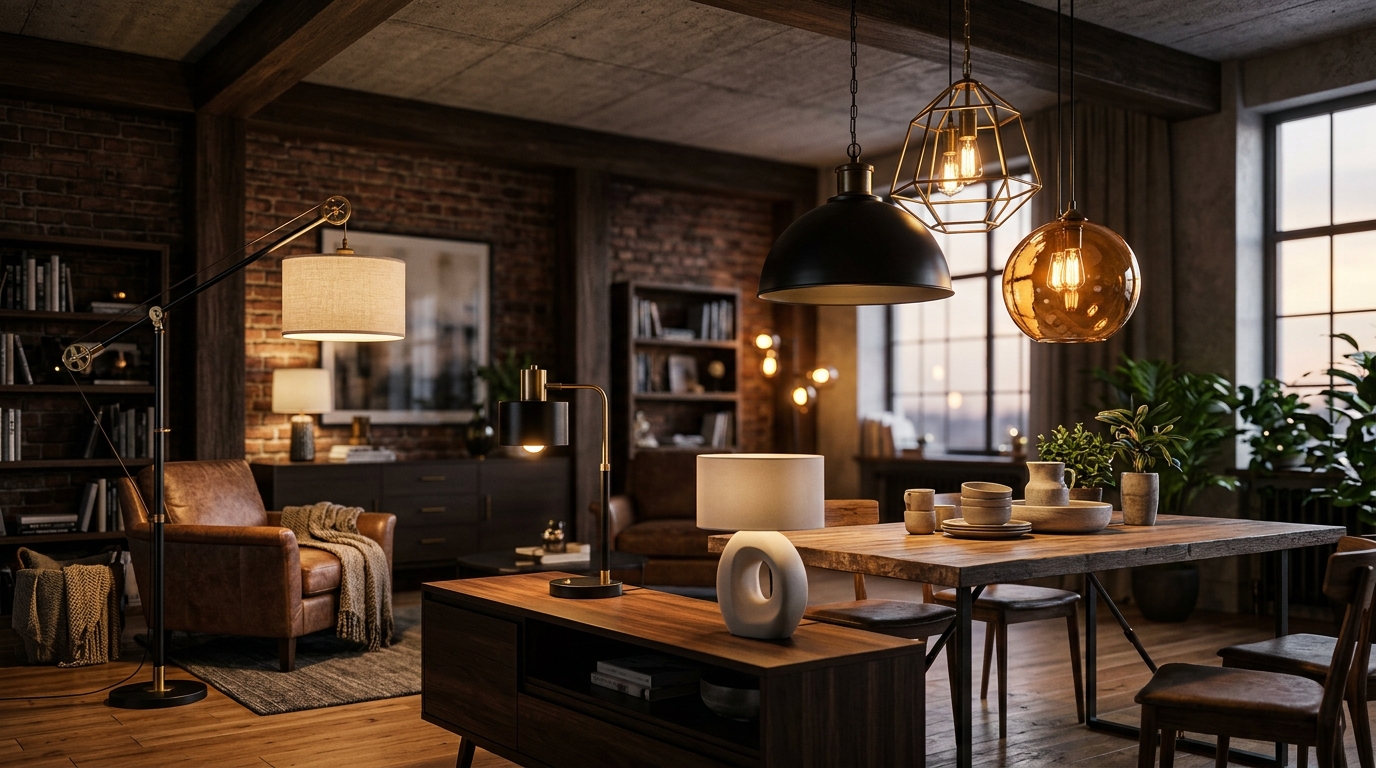
Lighting Design Guide: Layering Light for Every Room
Ambient, task, and accent lighting. Learn how to layer light sources to create depth, warmth, and functionality.
Good lighting is invisible. Bad lighting is all you notice. The difference comes down to layering, which means using three types of light in every room.
1. Ambient Lighting (The Base Layer)
This is your general room illumination. Ceiling fixtures, track lighting, or a statement chandelier provide the base. A brass sputnik chandelier or linear pendant light works well in living areas.
2. Task Lighting (The Functional Layer)
Directed light for specific activities. A floor lamp next to your reading chair or a table lamp on your desk. Adjustable floor lamps with swing arms give you control over direction and intensity.
3. Accent Lighting (The Mood Layer)
This is where lighting becomes decorative. Use it to highlight features or create a cozy corner. Exposed filament pendant lights and concrete table lamps double as sculpture.
Choosing the Right Temperature
Warm white (2700K-3000K) creates a cozy atmosphere for living spaces. Cool white (3500K-4000K) is better for task-oriented areas like home offices.
Scale and Proportion
As a rule of thumb, a pendant should be about one-third the width of the surface below it.
Browse our full lighting collection.
More Articles
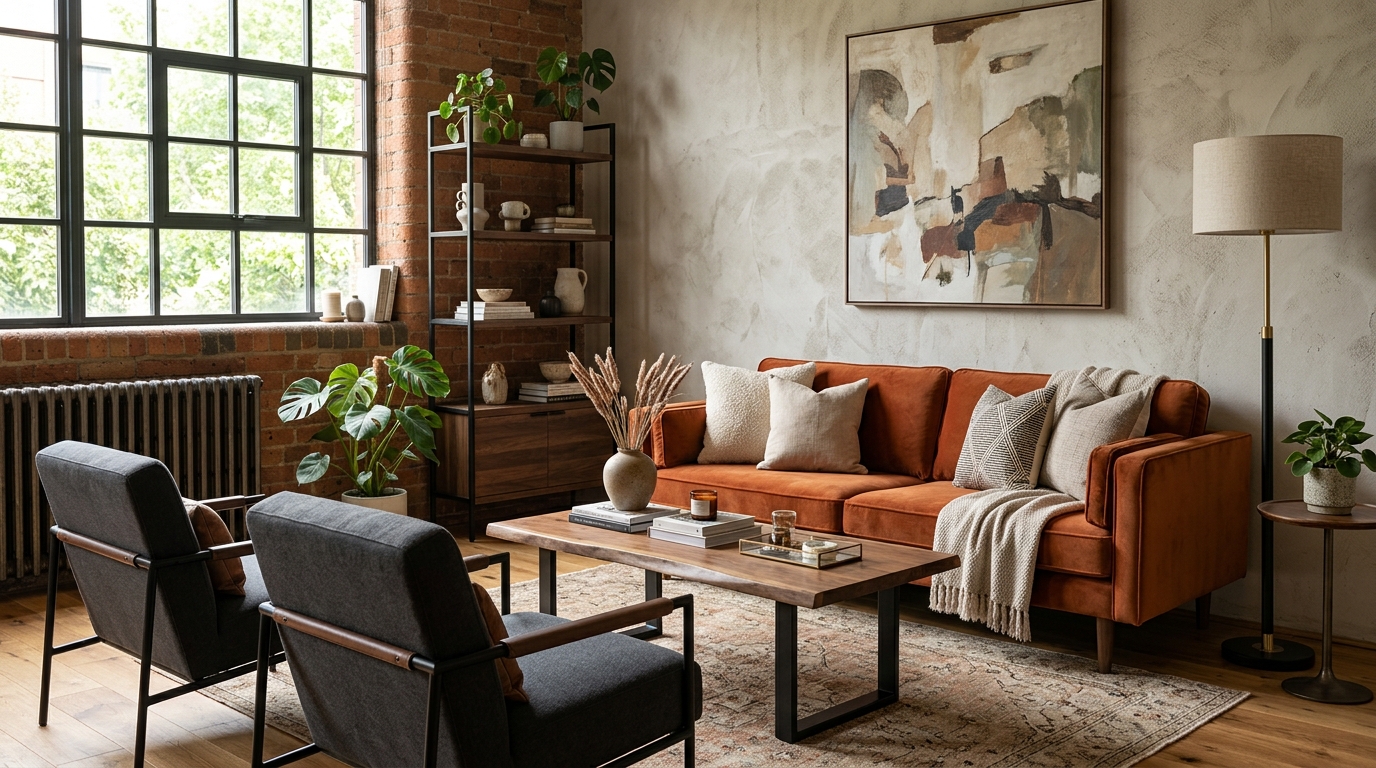
Modern Furniture Trends for 2025
From industrial concrete to mid-century revival, here are the furniture trends shaping modern interi...
Read More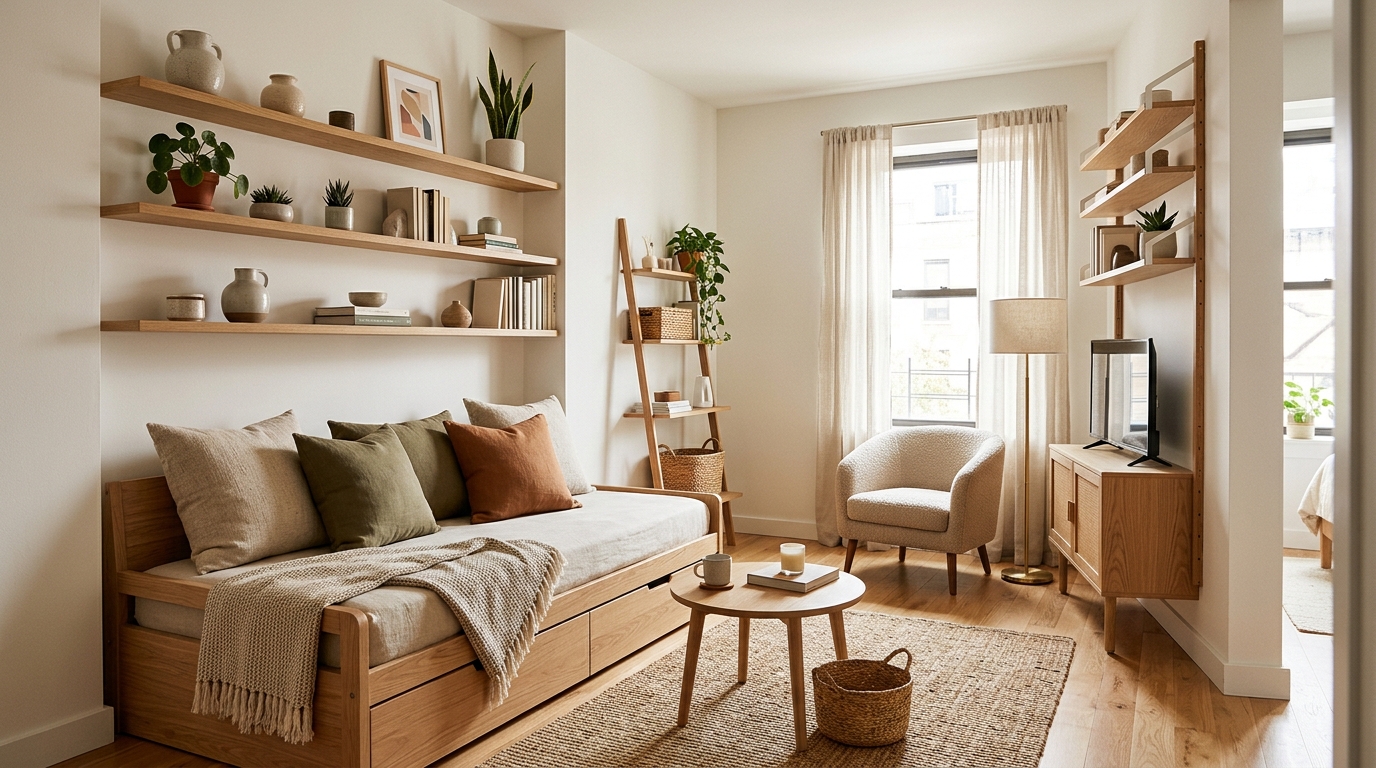
How to Decorate Small Spaces Without Sacrificing Style
Multi-functional furniture, vertical storage, and strategic lighting. Practical tips for making smal...
Read More
Furniture Materials Guide: What to Look For and Why
Concrete, reclaimed wood, brass, and natural fibers. Understanding materials helps you choose furnit...
Read More